
Choosing the Right Dental Micromotor for Your Lab
Dental technicians need reliable tools for acrylic, zirconia, stone, and metal framework work. The right micromotor improves speed, accuracy, and comfort during long finishing sessions.
Soft materials (acrylic, stone) often need moderate speed and smooth control. Hard materials (zirconia, metal) benefit from higher RPM, strong torque, and brushless motors. Selecting the proper micromotor reduces chairside adjustments and rework.
Ready to compare models side by side? Download our micromotor PDF — the full Dentsma digital brochure with specs, control options, and applications — below.
Brushless Lab Micromotors
Modern brushless lab micromotors deliver high torque with low heat and vibration. They suit continuous grinding and polishing of hard materials such as zirconia and metal frameworks, while remaining gentle on acrylic.
Desktop Control & Handpiece Options
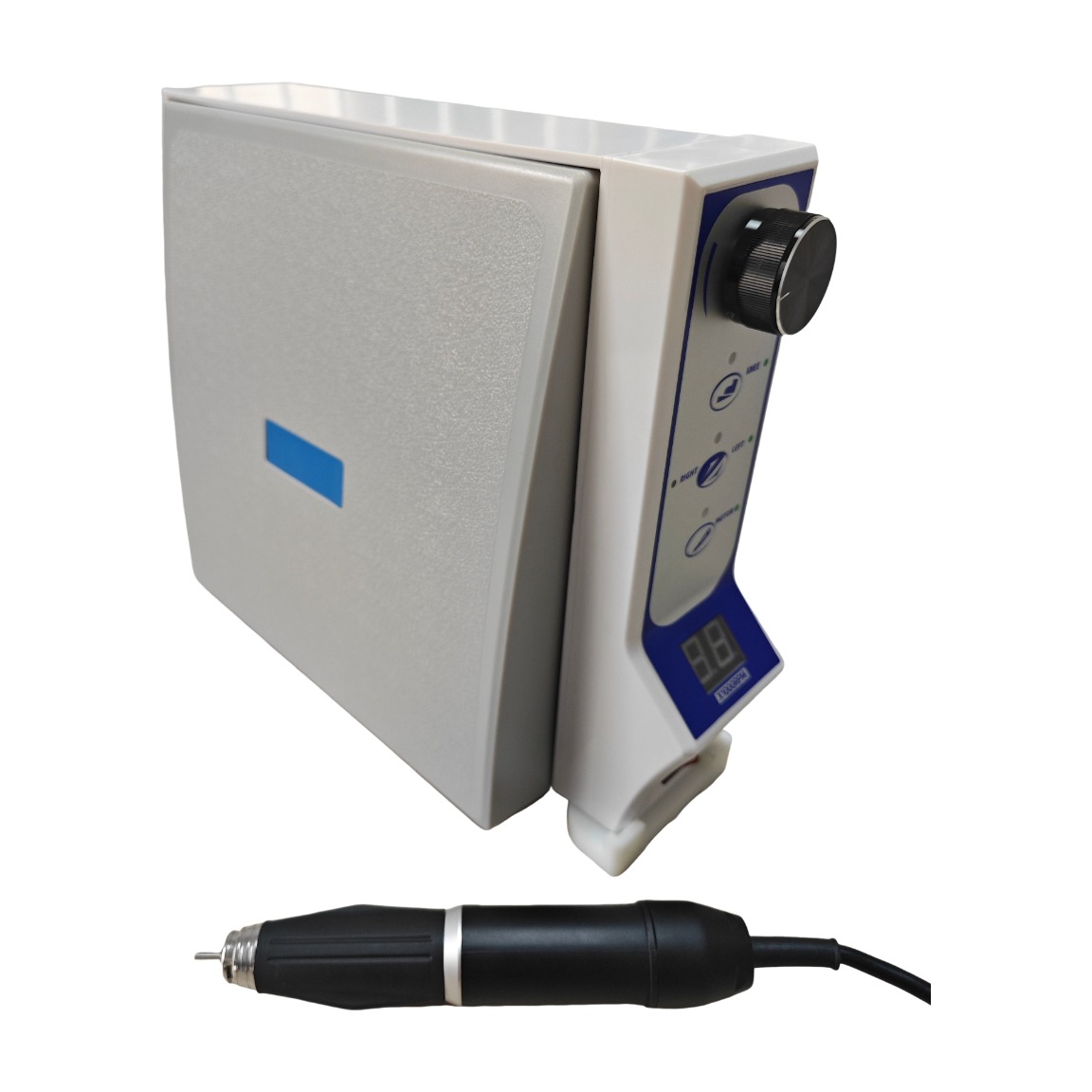
A desktop control unit keeps the workspace clear and gives stable speed adjustment. Pair it with a cored handpiece for general lab use, or a brushless E-type micromotor that accepts both contra-angle and straight handpieces—ideal when you switch between tasks.
Control Styles That Match Your Workflow
- Foot pad — classic hands-free speed control, including Marathon 3-style units, offer these options so you can choose what fits your bench best.
- Knee control — The motor body have the knee control, allowing the technicians use their knee to touch the control panel to control the speed, keeping both hands free for precise prosthesis.
Technicians also take a reference of our laboratory equipment here, the micromotors included. Go here: https://www.dentsma.com/product-category/lab-supplies/dental-lab-equipment/

